
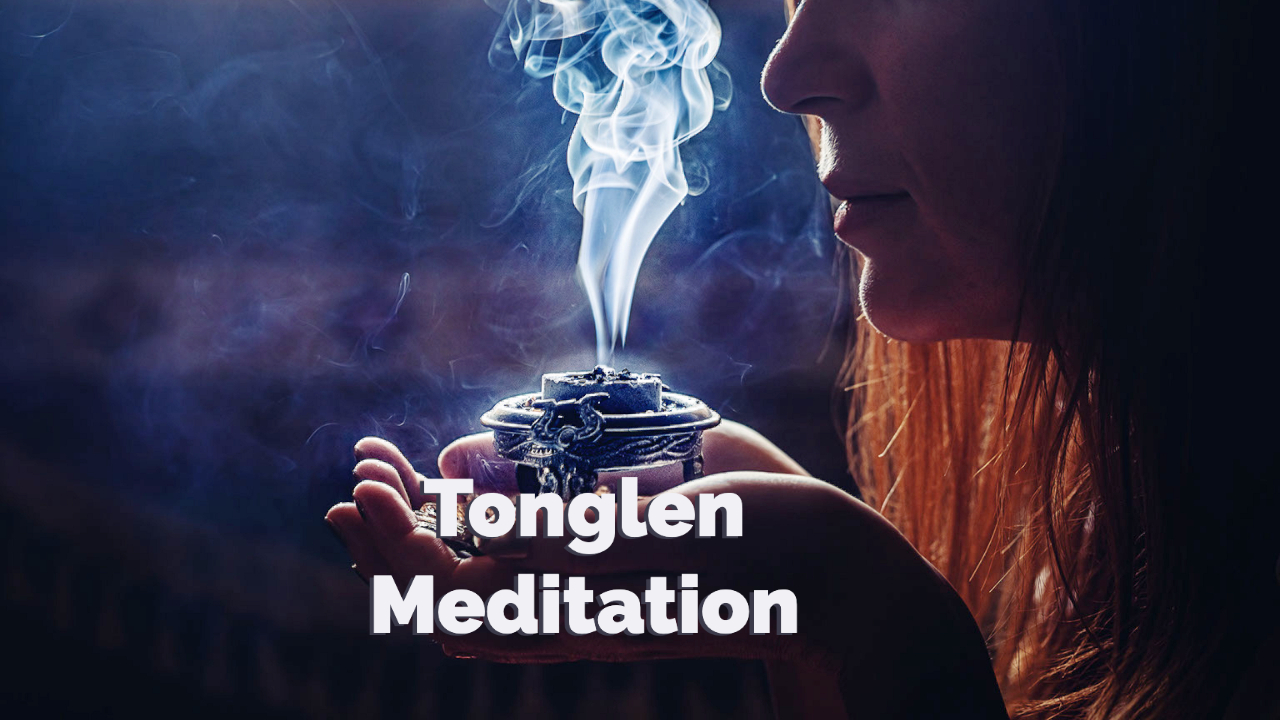

The world needs compassion more than ever. There is turmoil, and many people are suffering. We can help by bringing compassion and attempting to understand their situation while also being open to listening and learning from others’ experiences.
In this musing, I introduce the meditation practice of Tonglen. Tonglen is a Tibetan Buddhist meditation used to cultivate compassion. It is a simple yet powerful tool for self-growth and transformation. Tibetan monks and nuns practiced the technique for centuries, but it has also recently gained popularity in the Western world.
What is Tonglen?
Tonglen is a Tibetan Buddhist meditation practice. Tonglen means giving and taking, exchanging self with others.
Tonglen asks us to face our usual avoidance of suffering. During Tonglen’s practice, we imagine breathing in the suffering of others and sending compassion or what is needed on the out-breath. The practice is intended to create love and compassion for others and ourselves. Tonglen opens us to the potential of a larger perspective, including the awareness of others and the boundaryless nature of our actual being.
The Benefits of Tonglen
There are many benefits of practicing Tonglen. It helps to cultivate compassion, reduce stress, heal trauma, generate happiness and develop self-compassion. It brings awareness to the feelings of all beings.
Meditation is a tool to anchor the thoughts and emotions that overrun your mind, allowing you to find the inner eye of the storm. Imagine diving below choppy waters into the calm depth below the surface. The surface is still choppy, but below is peace. The choppy surface is the nature of your mind. At the surface are the disruptions of senses and emotions. Just below the depth is the calm center, the witnessing presence. Yoga calls these disruptions the Citta Vritti, The mental disturbances that keep you from understanding the peace beneath them.
Tonglen and the two arrows of Suffering
Tonglen, as a meditation practice, goes one step further, helping to process pain and suffering to realize we can’t escape the pain and suffering.
Processing painful emotions into joy is not easy.
Humans resist pain and suffering. So we try to avoid it.
Tonglen accepts that we can’t shut out misery if we wish to feel the full spectrum of human emotion, including joy. Tonglen teaches us to face our fears and unpleasant feelings and transform them into compassion and joy. You may focus on a specific fear or pain, breathing it in and out, releasing them, noticing where you brace against pain and suffering, adding to the discomfort.
The Buddha spoke about this avoidance of suffering. The suffering is like being hit by an arrow. Bracing against and resisting suffering is like being shot with a second arrow believing that ‘things shouldn’t be this way.’
Resistance amplifies the pain. By accepting that suffering is part of the human experience, you don’t need to be afflicted by the second arrow,
Applications of Tonglen
You may work with Tonglen for a specific suffering person or a community. You may wish to create compassion for someone you don’t understand or disagree with. For example, you may work with someone who is difficult or has caused you harm. You may choose to work with your suffering.
The practice of Tonglen consists of taking and sending. So first, imagine taking on the suffering of another to lessen their load or send it away completely. Then imagine giving your compassion and joy back to them.
The Practice of Tonglen
Start by sitting with your eyes closed and thinking about someone you care about or who has done something to make you feel loved or happy.
Imagine breathing in their pain or discomfort and drawing it into your heart. Then, imagine turning their pain into joy through your compassionate heart. Next, breathe out love and happiness. Finally, imagine sending it to them.
Once you have practiced with someone you love or care for, you may work with someone who has harmed or upset you. Breathe in their pain or the pain they have caused you, and send them back your compassion.
Finally, you may choose to work with your suffering or pain. Breathe it in. Give this pain the compassion of your heart, breathing out peace.
Tonglen for Compassion
The lens through which you see the world is distorted by your biases and beliefs. If your view of the world is very narrow, this may lead to viewing things in black and white, with no middle ground or nuance. This narrow, black-and-white vision of the world is known as polarized thinking.
Polarized thinking is a logical fallacy that involves reducing complicated issues to extremes. Polarized thinking is an oversimplification of the truth, reducing everything to a category. It is creating black and white, no greys, no in-between. It is a distorted lens that blurs reality.
This thinking can be dangerous because it limits your ability to solve complex problems by oversimplifying them and categorizing them into black-and-white categories. As a result, you fail to see the possibilities in the greys and the rest of the rainbow.
We are not all the same. We all have different opinions, beliefs, and cultures. We can’t just see things in black and white.
To understand others and avoid conflict, we must understand the grey area surrounding every issue. And use compassion as a way to bridge these gaps in understanding.
Compassion does not have to mean agreement. It seeks to understand the experiences of another. To realize that where you see white, others may see black or shades of grey.
The practice of Tonglen helps open your heart to view the reality of those around you. It helps dissolve the barriers, the illusion of separation of self and others, the heart of yoga practice.
Tonglen Meditation Guided Audio
I have included an audio recording with a Tonglen meditation if you want to practice with guided audio. The recording is about 7 minutes long.
Tonglen Meditation
Tonglen Meditation Practice tips
Get comfortable either sitting or lying down and wear headphones if possible.
Place your awareness on your breath. On your next exhale, imagine exhaling out the white light of love and compassion, your wish to alleviate the pain and suffering of others. As you inhale, invite the smoky darkness of negativity and suffering to enter your heart, transforming it into the white light.
Take a few breaths breathing out the white light of love and compassion, breathing in the darkness of negativity and suffering.
Imagine someone you love that is facing fear, suffering, or darkness. Breathe in their darkness and fear, taking it from them.
As you exhale, your compassionate heart sends back soothing, gentle white light that comforts them.
You may choose to include other people or beings in your meditation. Breathe in the darkness of their suffering, and breathe out the light of love and compassion.
Wishing you peace.

0 Comments