

Meditation trains the mind to be present in the here and now. But, the untrained mind can be a massive barrier to successfully getting through your first five minutes of Meditation. Your mind, by nature, wanders. It defaults to anywhere but the here and now.
Sitting and trying to be aware with a flood of thoughts and senses, to-do lists, and random conversations in your head can be like watching a clown car unpack. There is way more stuff there than you ever imagined, and now you are being forced to sit with it and watch the show until the timer goes off. Watching your untamed mind can be overwhelming and scary.
When your brain is not focused on an object or task, it uses the Default Mode Network network network (DMN). The DMN is a continuously active network of brain regions. The DMN allows your brain to remember and plan for the future, but it can keep you out of the present. When you focus on a specific object or task like recognizing a face or remembering a telephone number, this default mode is quiet. It’s called the default mode because unless the brain is engaged, it wanders. The more time it spends in the default mode, the harder it is to keep your mind focused.
Anchor Your Mind
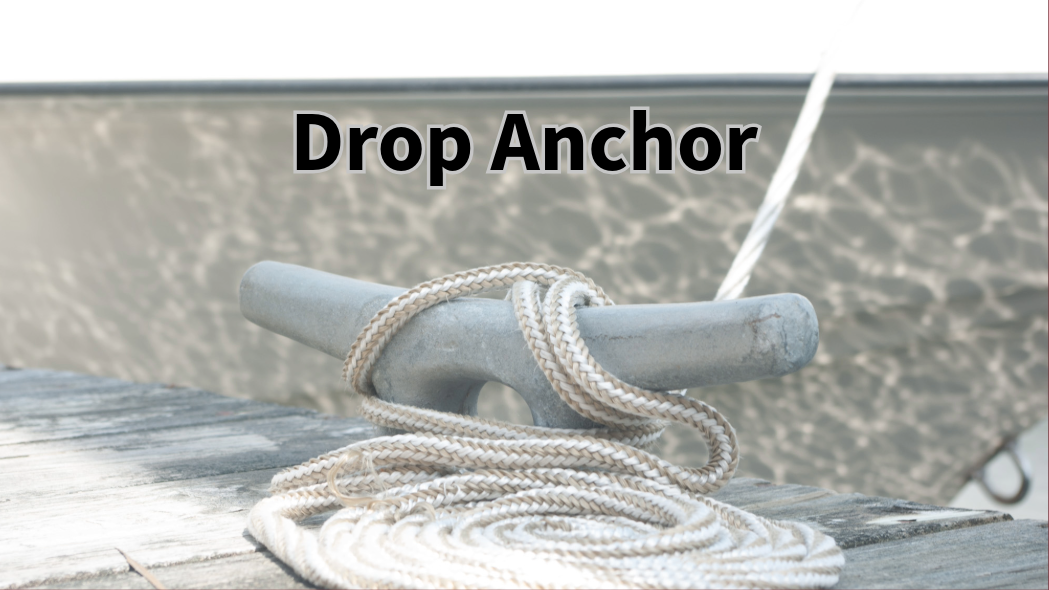
To keep your mind present, you need an anchor. An anchor is an object that you examine during Meditation. Using an anchor focuses your attention on one thing instead of trying to pay attention to every sensation that distracts your mind.
Objects of Meditation can be almost anything. Traditional practices often use the breath, sensations in the body, or a sound or spoken word or phrase.
Your anchor is the rope that ties your mind to the present moment. As you focus on your object, this itself causes the Default mode network to quiet, even though you may not notice at first.
Imagine a boat tied to an anchor. The boat starts to drift away from the anchor. The anchor keeps it from going too far. The boat might rise at high tide away from the anchor and sink back at low tide. There’s a dance between the boat and the anchor held fast by the rope that keeps the boat from drifting off completely. Your mental anchor is similar.
There will be times when your mind drifts off. You forget about your anchor. As you realize you’ve gone off onto another shopping list or a mental conversation with a family member, you allow your attention to come back to your anchor.
When your mind wanders, focus on the breath or your choice of an anchor. Be prepared to return to your anchor as your mind wanders. Your entire practice may be guiding your mind back to your object, over and over. A wandering mind doesn’t mean your practice is a failure. It means your brain needs more training. Your default mode network is still active. It takes time to overcome the existing mental patterns. Have faith that in time your mind will settle. When I first started meditating, I didn’t think I would ever make more than five minutes of sitting with a restless mind.
Concentration and Awareness
With repeated effort, you can develop focus and work more with the subtler practice of awareness.
Meditation is not stopping your mind but bringing awareness to the moment, seeing things as they are, unfiltered by your pre-programmed perceptions. Meditation is a balance between focus, keeping your mind from running away, and awareness of your experiences. It takes more focus as a new meditator. As you find this balance, you begin to integrate the left half of the brain, focused and concentrated, and the right half of your brain, which feels intuitively beyond words.
With time concentration improves, and there will be more emphasis on awareness. Awareness is the ability to notice object qualities. If you cannot keep your attention on the object, it will be more challenging to see its qualities.
You may feel the sensation of the breath shifting between the inhale and the exhale. You may hear sounds getting louder or softer. You may focus on a feeling in the body and be a little curious about it.
What are you feeling? Where are you feeling it, and where do you feel the sensation?
You become the observer.
Be the Observer
The observer’s goal is not to think about the object but to experience your anchor’s subtle shifts and changes. Sensations come and go; they ebb and flow. Thoughts and emotions pop up and eventually drift away.
Don’t judge the object or experience as good or bad. If you use your breath as an object, notice the sensations as the breath moves and shifts. Be a little curious about what you are feeling, what is moving, how is it moving or shifting? If you use a sound for your anchor, you may notice the sound shifts in some way, getting louder or softer. Does the sound have a shape? Does it seem to be coming from one side or all around you? Does the pitch change? Just observe and notice.
Like any practice, it takes time to develop a meditation practice. Have patience, have faith. Drop your anchor, and be prepared to watch the show.

0 Comments