

How you sit determines how successful your Meditation practice will be. The goal of the meditation seat is to keep you awake and alert but relaxed. You need to be comfortable but not so comfortable that you fall asleep. However, if you need sleep, take a nap instead of meditating!
You need to find a seat to hold for the length of your meditation without pain or tension. If you force yourself to sit upright, you create tension in the physical body. This tension causes the Central nervous system to remain engaged, making it more challenging to move from thought.
If you are not comfortable, your attention will be on the discomfort.
If you are tense and rigid in your body, you block out sensation and keep your mind engaged. When you align yourself physically in an easeful way, you align with gravity, with the earth that supports you and the energy of everything around you. You get out of your head and into awareness.
You don’t need to sit in a cross-legged position on the ground to meditate. You may sit in a chair or even lie on your back if that is most comfortable for you.
If you are seated, your spine and body should align in a way that does not create tension and requires little effort. You allow gravity to work for you, not against you.
You may need to support yourself with props like a blanket or a cushion to keep your spine aligned. Have some pillows, blankets, and yoga blocks or books near you as you experiment with creating your meditation seat.
Setting up your Meditation seat
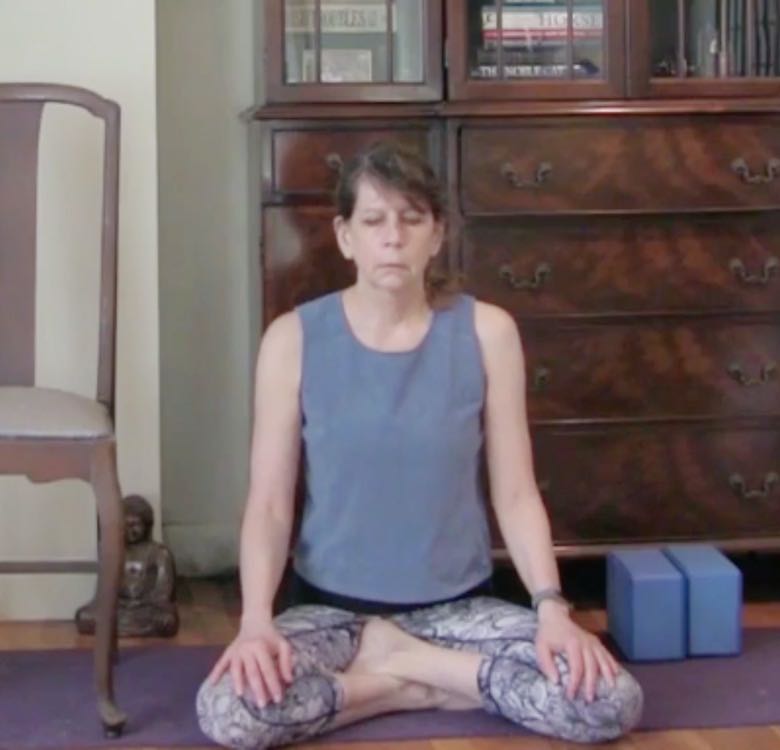
You may choose to sit with crossed legs on the floor in an easy seat, one foot in front of the other. You may need a folded blanket or couch cushion under your seat to raise your hips off the floor.
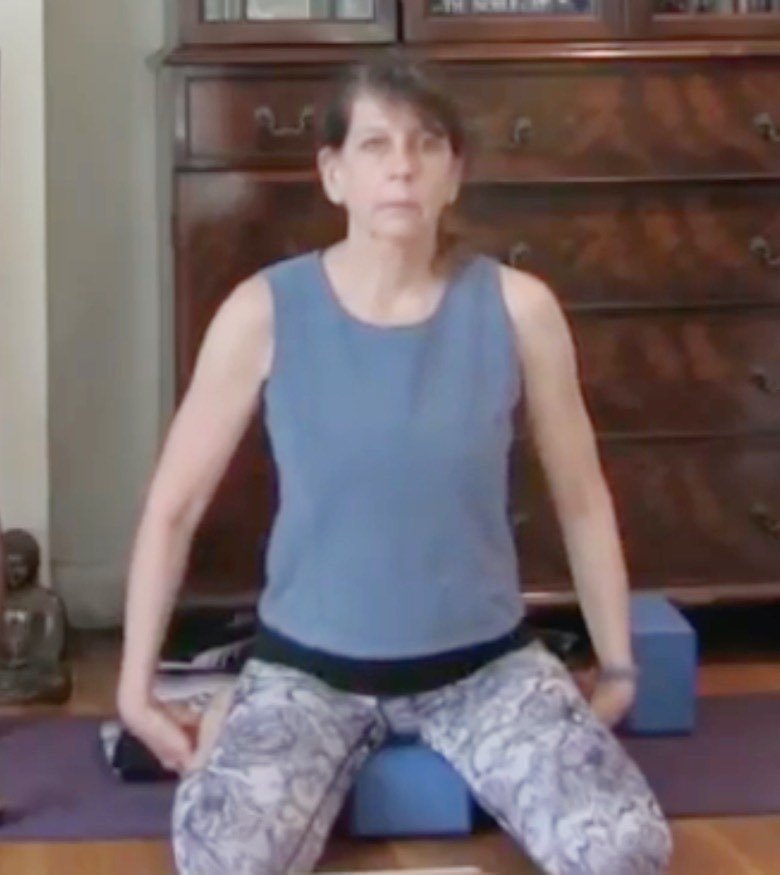
Another option is to sit in a sage position with your legs behind you. You may be sitting on a couple of books or a yoga block. A rolled towel or blanket may support your ankles.
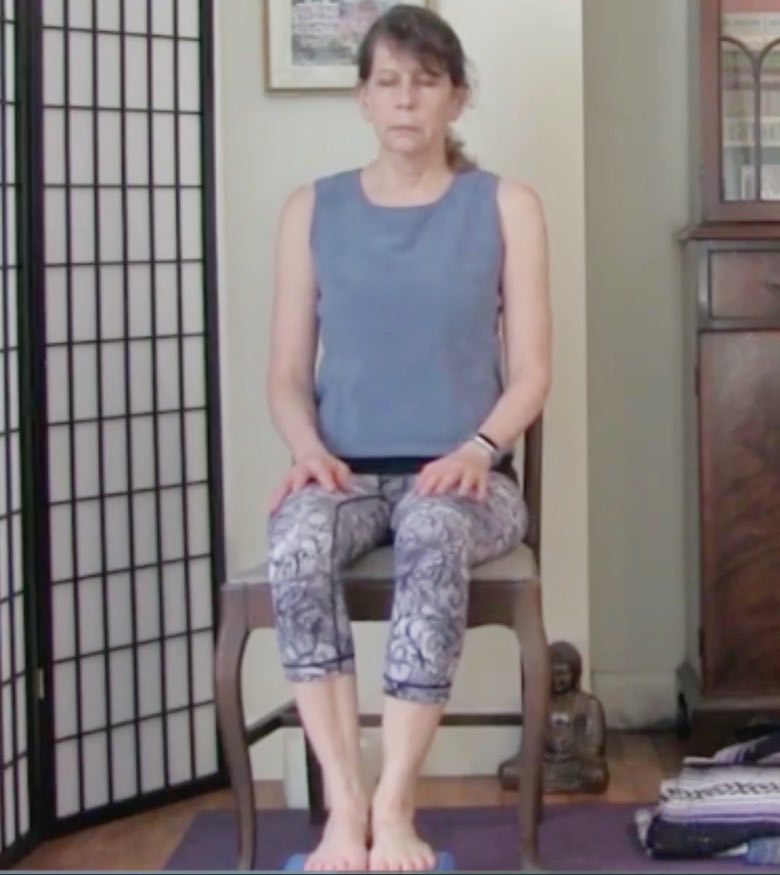
You might choose to sit in a chair with your feet resting on the floor. If your feet aren’t reaching the floor, place a book or two underneath them for support.
Once you have settled into the way you want to sit, allow your spine to lengthen from your seat to your head, not slumping and not forcing yourself upright.
Your seat starts by creating a stable base from your legs and hips
Your hips should be higher than your knees in a seated position, allowing the pelvis to tip forward slightly. When the pelvis tips backward, the low back rounds, the trunk moves forward. In that case, the front of the upper body compresses, including the lungs, making breathing more difficult. This also drops the head toward the lap. Sitting too far forward on the cushion causes the low back to hollow or arch. As you sit, imagine a line running up the center of your torso. Attempt to arrange your spine along this line. Sitting on a cushion can help raise the hips. Experiment with different blanket heights to see what works.
Imagine one vertebra stacking on top of the other. Your lower back should not be rounding. Your shoulders are not slouching. Readjust your seat if you need to. Remember, good posture starts from your seat.
The shoulders and arms are relaxed. Your arms hang loosely at your sides with even shoulders. The hands may rest on your thighs or be in your lap.
The head centers over your neck. Don’t let your chin drop to your chest. If your eyes were open, you would be looking ahead. The head weighs around ten pounds, so if it is too far in front of you, your neck will be straining to keep it from dropping forward.
Your eyes may be closed, or you might look just in front of you with a soft gaze.
Unclench the jaw, leave some room between the teeth. Imagine softening your lips, cheeks, and forehead.
If you feel tense, try moving
Shrug your shoulders, relax your jaw, and wiggle your fingers or toes.
Create any movement that helps release tension. If you still feel tense, try adjusting how you sit and adding more height under your seat.
If you are in a cool place, have a blanket ready to wrap around you. Sitting still will drop the body temperature. Also, being cold will create tension.
Experiment with different ways of sitting and using pillows and blankets.
See what works best for you.
Find your center
Once you feel like you have found your stable but relaxed seat, begin to add some movement, gently swaying your head and torso from side to side. Keep the swaying soft and gentle. Imagine the movement is starting at the pelvis, and the spine sways above your seat.
Shift your upper body to the left and notice how the right hip wants to lift to keep you balanced. Take a breath or two as far to the left as is comfortable, then come back to the center and then begin to move your upper body over to the right. Notice the left hip working to anchor you to your seat. Come back to center, and then begin to move from right to left, noticing how far over you can move, notice any sensation in your body. The sensations may increase as you move further to one side and decrease as you move back toward the center.
Allow the movements to become smaller and smaller until you’re back to the center. Once you are back to the center, take a moment to notice if you feel like you are leaning to one side or one hip is working to keep you centered. Make any adjustments you need to keep both hips level and the spine upright.
Start to rock forward and back, starting the movement with the pelvis. Imagine your sit bones move back toward your chair or cushion as if your pockets move towards the chair. As you move your tailbone toward the seat, you may notice the spine shift as the lower back rounds, the chest and head drop forward. Now, imagine lifting your pockets from your seat. You may feel the back body engage, especially the lower back, as your sitting bones move away from the cushion. The lower back curve flattens or even moves toward an arch. Take a few breaths moving back and forth between the two positions. Drop your pockets toward the seat, let the spine round forward, and then lift your pockets from the seat, lengthening your spine. Keep a steady breath, and don’t force any movement. You may be making small, subtle movements. Eventually, decrease your movement, and work your way back to the center.
Bring your awareness back to your seat and then your spine. Notice the stacking of one vertebra over the other. Take a moment imagining the downward movement of your tailbone and sit boned toward the seat and the upward moving of the stacked spine. If you feel like your spine is rounded or your back is tense, play with adjusting the pelvis sitting further back or further forward to find a neutral spine.
Observe
Try sitting for a few minutes, testing out your seat. If you begin to feel tense, you can adjust or create movement. Use the movement as your object of meditation.
Each time you come to your seat, you may have a different experience. So with each practice, bring awareness to your seat and spine. The act of bringing awareness to sensations in your physical body is a meditation in itself.

0 Comments