

In my last post, I wrote about pairs of opposites and finding the just-right balance in the spectrum of possibilities.
There is also another range of extreme opposites. We can view ourselves as separate physical beings, unconnected in any way to nature or others, or believe we need to disconnect entirely from material existence.
Duality vs. Non-duality in Yoga
Like the Yoga Sutras of Patanjali, early Yoga texts sought to eliminate or separate the material, physical world by renouncing any attachments to the physical body, the mind, and senses. This early philosophy divided the physical world known as Prakriti from pure consciousness, known as Purusha.
Purusha has no form, no thoughts, and no emotions. This consciousness infuses life into us, our minds, and the environment around us. This philosophy attempts to separate the self (the physical body and mind) from the Self, the part of us that is pure consciousness. It can be ascetic, denying the physical body and connection to anything other than the underlying consciousness.
Enlightenment meant a total rejection of the physical world, an extreme belief.
Later texts sought to create a union, understanding that a physical body is needed to experience the world. This realization that pure consciousness, Purusha, exists in all things and all beings brings enlightenment. Everything arises from one consciousness. The perception of separation is an illusion.
How your senses deceive you
In Yoga, there is an illusion of Asmita or “i” ness. Because you live in a physical body and are overwhelmed by your physical sensations, you believe you are only that physical body.
The ego, the “I” ness, is constructed based on your unique experiences through your senses of the world around you. You have likes and dislikes, things you’ve learned about the world through experience and knowledge. Some of this is healthy, like knowing that getting stung by a bee hurts. Some of these experiences lead to perceptions about the world that may not be true.
We have all had different experiences. Two people could have the same event occur, and have two different experiences. Someone who loves dogs might be excited about a dog rushing at them, but someone who has been bitten may panic. Understanding how perception filters your experiences can help keep you from reacting subconsciously or choosing your interaction.
Koshas – Layers of being
In Yoga, there is the concept of the Koshas. The layers of being. The physical body is the grossest, densest form, each layer becoming more related to consciousness. Beyond the physical, mental, and emotional layers of self are layers of wisdom and higher consciousness. Your physical body is a separate form. You need a physical body to operate in the physical world. You need a sense of “self” to keep the physical body from physical harm. A healthy functioning ego defines boundaries mentally and emotionally from others. But at the level of wisdom, you become intertwined deeply with a pure consciousness beneath your awareness.
How do you define yourself?
This sense of “i” ness can lead to a sense of isolation, needing to defend “I’ or “mine.” It leads to the idea that you are permanent, unchanging. But this is not true. We will all age. Over time most of the cells in your body are replaced, often more than once. So if your physical body is not the same as the one you started with, who are you? What defines you?
The continuum of ego to non-self
There is a continuum of an isolated self to self as an illusion, no different than a range of opposites from hot to cold. An ego-driven self will be self-centered, seeking pleasure and avoiding anything that is not pleasurable. It may lack compassion or empathy for others or the environment. As the self’s consciousness expands beyond your core being, it becomes possible to cultivate compassion for others, open your heart, and stand in another’s shoes.
Denouncing the physical body is not a healthy practice. You need a physical body and healthy boundaries to flourish in a physical environment.
In truth, you are both separate and connected. Your physical body operates in a material world, but consciousness is the reality of who we are. You are a person and an ego, yet you are also consciousness beyond the ego.
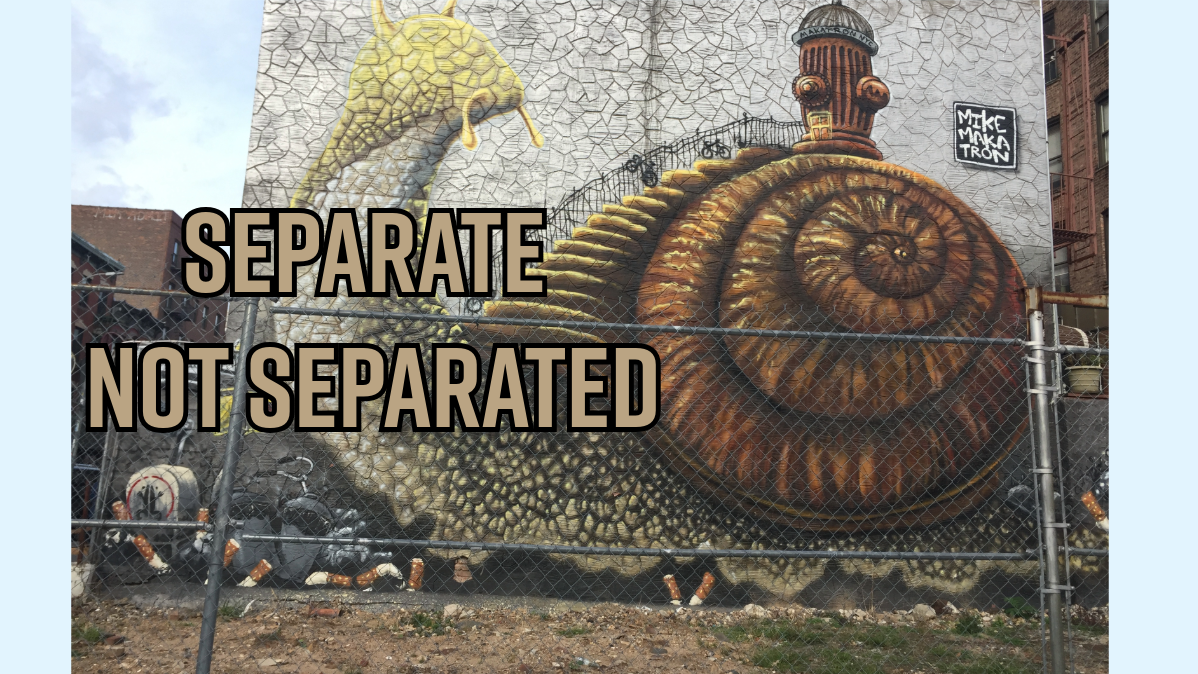
Perhaps we can be separate yet, not.
Imagine a wave in the ocean. Above the surface of the water, the waves appear separate. Underneath the wave, there is an ocean that connects the waves. Suppose your consciousness developed to sense the deeper layers of self beneath the physical. Then, you could sense the ocean beneath the waves.
You are the witness
Ultimately Yoga teaches you are the witness. You can separate your deeper awareness from your thoughts and your emotions. The seer or consciousness is timeless. It is enduring and unchangeable even as the world around you, your physical body, mind, and everything else shifts and moves and changes around you.
You are both unchanging and part of the cycle of nature and its beautiful unfoldings. Separate, but not separated.

0 Comments