
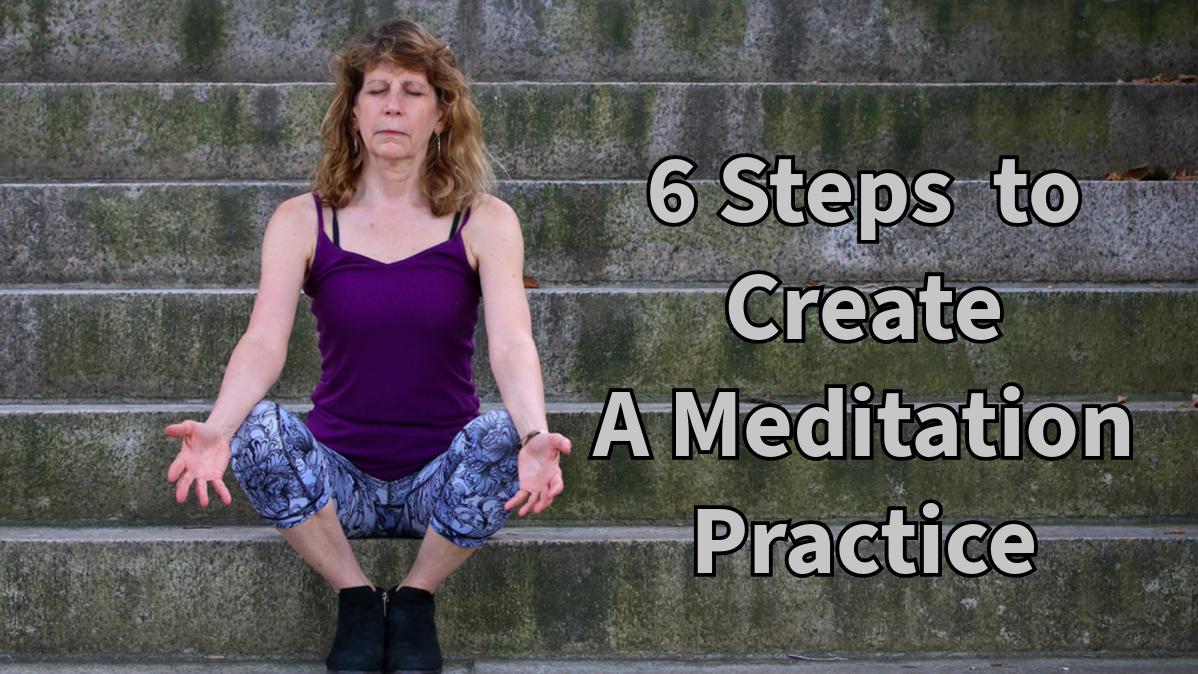

I want to offer six simple steps to create a lasting meditation practice in this musing.
What is a meditation practice?
By meditation practice, I mean, hopefully, a daily practice, first seated. You may find your practice becomes a part of your day.
Meditation needs to become a habit that is part of your routine. You need to stay committed. Commitment means sitting even when you don’t feel like sitting.
Start with a clear intention of why you want to meditate. Are you looking for more clarity or a calmer, less reactive mind? Remind yourself of the benefits of practicing when you feel you would rather skip the practice.
Step 1 – Find a Consistent Time and Place
It helps if you meditate consistently to benefit from a calmer, clearer mind, less stress, and greater awareness of your inner workings and environment. Try to set up a consistent routine of meditating daily. Create an appointment in your calendar. Find a time that can be consistent and when you will be the least likely to be interrupted or stressed. Set a phone alarm if you need to. I like early mornings before my day gets away from me. Maybe you consider getting up ten minutes earlier or hitting the snooze alarm one less time.
Once you have a time that works for you, find a place that works for you. A consistent place makes coming to your time and place a habit. This may be a corner of a bedroom or a spare room. If possible, pick a location that does not remind you of the thousand things you should be doing, like an office room. Prepare for meditation by setting up your space and clearing any clutter that might distract you.
You may choose to get a notebook to journal your practices. If you are journaling, have your notebook nearby when you meditate. You may choose to write your intention in your notebook. This intention may change over time or with each meditation. Your journal entry may be as simple as noting the day, the time, and a few words about your experience like sleepy or agitated. Over time this will help you notice any patterns and help track your progress.
Step 2 – Clear the distractions and get comfortable
Sit at your scheduled time in your chosen space. Turn off your cell phone, email, or any other digital distractions. Close the door if you need to keep family or coworkers out. Let everyone know that you need a few minutes uninterrupted. Sit as comfortably as you can. It may be in a chair with your feet touching the floor or a book. It might be on the floor sitting on a blanket or pillow to allow your hips to be higher than your knees. Make sure your seat is comfortable and does not create tension. Keep a blanket nearby if you get cold during practice. Remind yourself of your intention, why you choose to practice.
The first few times you practice, make sure this is a time when you are not tired, distracted, or hungry. Suppose you are disrupted during your practice by noise or other people. Is there a way to eliminate the distractions or find another place? Maybe another time would work better?
Step 3 – Start small
Start by sitting for only five minutes or less, maybe eventually ten minutes. Sitting too long at first may be frustrating and harder to keep in your schedule. It is better to get into the habit of sitting by making it as easy on yourself as possible. As time goes by, you may increase the sessions by a minute or a few minutes at a time.
Step 4 – Choose your meditation
You may choose a guided meditation or sit with a pre-chosen object like your breath. You may have already experienced a guided meditation on the breath. There are other objects you can use as a focus or anchor. The breath is the most accessible because our breath shifts with each inhale and exhale, and you can feel or sense it at some point in the cycle. Breath can also help calm the mind. When the breath slows, the mind tends to slow. You may meditate on a sensation in your body or another sense, like sound, or gaze at an object or candle.
Once you begin to notice all the different objects you can use, you can choose to meditate anytime and anywhere.
You might take a few deep focused breaths during your day to calm yourself or gain clarity. You can meditate in line at a checkout, maybe focusing on your breath or the noises around you. You can offer loving kindness to someone challenging in your life, or even yourself.
If you decide to meditate without a guided audio, there are meditation timers or apps that will keep track of the time for you. An oven timer will work just fine.
Sit for the time you decided, even if you feel distracted or unproductive.
Step 5 Let go of expectations
Bring your sense of humor, and be prepared to be with whatever your mind throws at you. You will have a different experience in each meditation. Don’t try to force out the thoughts. You can’t stop them. Acknowledge the thoughts that come up and move back to focusing on your object of meditation. Meditation does not need to feel peaceful and blissed out for it to be effective. It is a practice, have patience, and be prepared to laugh at whatever comes up as you sit.
Step 6 – Stay with it
Starting a meditation practice is not easy. Remember, you are training your brain to focus. If your mind has been running 100 miles per hour for years, it won’t be easy to train it to slow down. There will be practices where you won’t feel like you accomplished anything, the practice was restless, or you couldn’t focus. That’s ok. Stay with it. Know that even during the not so blissful practices, you are still gaining a benefit, working toward your intention. Meditation takes time. Meditation takes patience.
Find your seat, and enjoy.
Interested in trying out a guided audio meditation? Click on the link below.
Guided Audio Meditation – The Breath

0 Comments