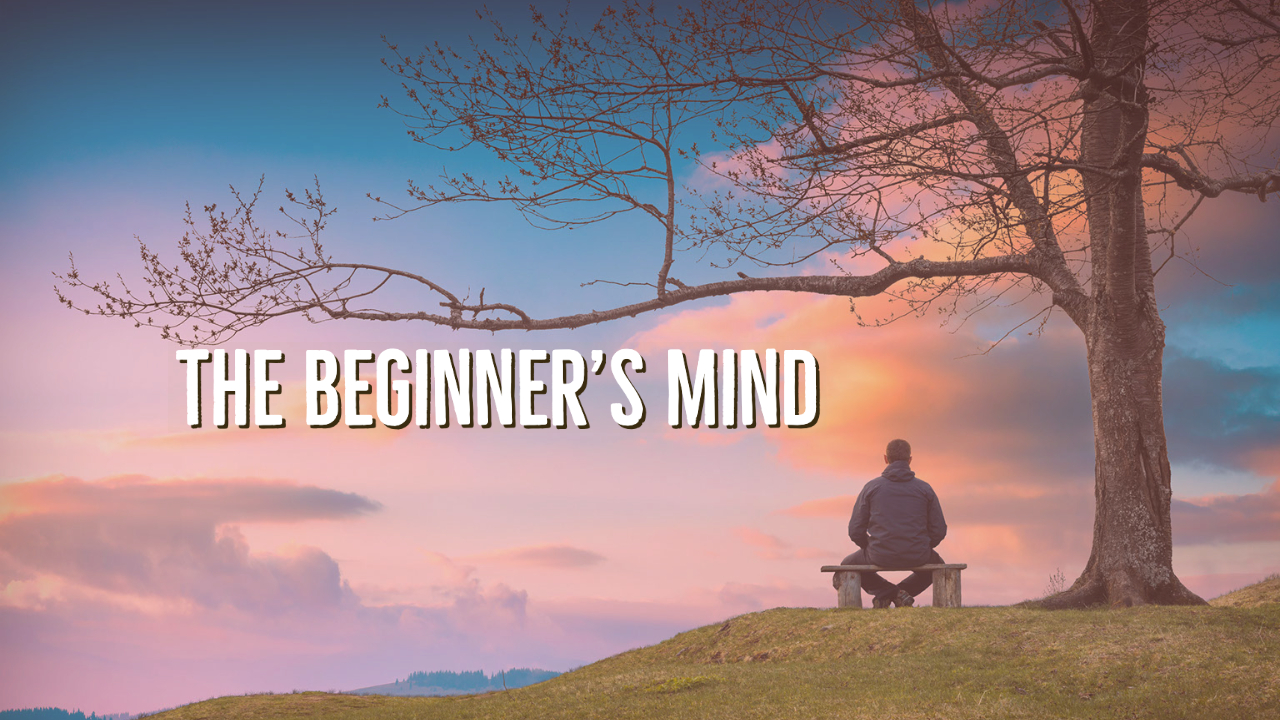
Beginner’s Mind

Author diane

I am a self-professed control freak who found yoga, meditation, and NLP to manage self-induced stress. I obsess over anatomy books, full moons, and the mysteries of being human. I have been practicing various styles of yoga and meditation for over twenty years. I am a master NLP Practitioner, I am registered with the Yoga Alliance as an RYT-500 yoga teacher. I am also a certified meditation instructor and Ayurvedic practitioner.

Create a Mind Full of Curiosity and Wonder

A beginner’s mind is a mind that is empty of expectations, preconceived ideas, or judgment. Instead, it is a mind full of curiosity. Like a small child witnessing something for the first time, it is full of wonder. Adopting a beginner’s mind is looking at something with fresh eyes as you have never seen it before.
 
Buddhism calls this “Don’t know mind.” Don’t know mind is letting go of expectations. It is curious. You don’t need to let go of your experiences or knowledge, but be open to learning more and seeing things differently. The beginner’s mind does not pre-judge something before experiencing it.
 
For the guided meditation, pick an object that is near you and familiar to you. It might be a piece of jewelry or an object from your desk. Maybe it’s a picture. Set a timer for about 2 minutes. Settle into your seat, and take a moment to anchor your mind on the sensation or sound of your breath. When you are ready, begin to examine your object. You may be looking at the object in front of you, or if you can hold it, feeling it and seeing it. What do you notice first about the object? Use your senses. Is there a color you see first? Is it shiny or dull? What shape is it? Does it cast a shadow? Does it reflect light? If you can hold it or touch it, what do you notice? Is it smooth or rough? Heavy or light? Maybe close your eyes briefly and see if you can envision the object. Be curious, and try to experience the object with your beginner’s mind, as you have never seen or felt this object before. Did you notice anything new about your object? You may spend some time observing your breath with this same sense of wonder and curiosity.

Beginner’s Mind Guided Audio

In this audio, I talk more about the beginner’s mind and how to create a beginner’s mind.  I will lead a guided meditation using your beginner’s mind with a familiar object.


Zen Master Shunryu Suzuki said, in Zen Mind, Beginner’s Mind: Informal Talks on Zen Meditation and Practice, “In the Beginner’s Mind, there are many possibilities. In the expert’s mind, there are few.”

Adopting a beginner’s mind is looking at something with fresh eyes as if you have never seen it before. Buddhism calls this “Don’t know mind.” Don’t know mind is letting go of expectations. It is curious. You don’t need to let go of your experiences or knowledge, but be open to learning more and seeing things differently. The beginner’s mind does not pre-judge something before experiencing it. 

Set up a comfortable seat, and have a familiar object nearby.  As you set up for meditation, make sure you are not creating tension as you sit.  There are no “shoulds” in the beginner’s mind.  If you feel tense, create movement, you can sway your body side to side, or experiment with placing a book under your feet if your feet are dangling from the chair.

Start by anchoring your mind on your breath or the sensation of your seat meeting your chair.  

When you are ready begin to examine your object.  If you start getting into your critical, thinking mind, using words or judgments like good or bad, see if you can move to your senses.  What color do you notice?  If you are holding the object, what do you feel? Imagine you have never experienced this object before.  What do you notice most about it?  Do you notice anything different?

Try practicing this exercise with other objects, or your breath.  Just notice, like a small child who has never experienced this before.  

Enjoy!

0 Comments

Submit a Comment

Your email address will not be published. Required fields are marked *