


In this musing, I discuss the sacroiliac (SI) joint. First, I will talk about what it is. Then, I’ll discuss how yoga poses can affect it and suggest ways to stabilize this joint during Yoga to avoid pain, discomfort, and injury.
What is the Sacroiliac (SI) joint?
The sacroiliac joint, or SI joint, is where the sacrum (your tailbone) joins the two halves of the ilium (the large bones of your pelvis). This joint transfers the weight of your upper body to your legs and vice versa. It also creates stability during movement.
The SI joint should be relatively immobile
Only a little movement is needed to absorb shock and distribute weight evenly through the body. The ligaments around the SI joint and the muscles of the lower back and hips that stabilize the pelvis also stabilize the SI joint.
The SI joint can become dysfunctional
SI joint dysfunction can occur when the joint becomes too mobile due to the weakening of the ligaments and muscles supporting it due to injury or aging.
What happens if the SI joint becomes dysfunctional?
Sometimes, the SI joint locks in one position. In addition, there might be decreased range of movement and stiffness in the lower back, hips, or thighs. Activities like bending, lifting, or twisting may become challenging because of reduced mobility. Instability in this joint can make it difficult to maintain balance and increase the risk of falls.
What are the risks for SI joint dysfunction?
SI joint dysfunction may occur with degenerative spinal issues or previous back or hip injuries. In addition, during pregnancy, hormonal changes can cause the ligaments in the pelvis to loosen and stretch.
Hypermobility and the SI joint
Hypermobility, or the ability of joints to move beyond their normal range of motion, can create instability in the SI joint.
The SI joint typically has limited mobility due to the strong ligaments and muscles that stabilize it. However, in people with Hypermobility, the ligaments and muscles may be weaker and more easily stretched. This stretch allows the SI joint to move excessively, creating instability.
In addition, Hypermobility can affect other joints, further aggravating SI joint dysfunction. For example, Hypermobility in the hips or lumbar spine may cause the SI joint to bear more weight, leading to increased stress and dysfunction.
Yoga and SI Joint dysfunction – Problematic Poses
While Yoga is generally beneficial for building strength and flexibility, certain poses can stress the SI joint.
Next, I’ll explore common Yoga poses that can affect the SI joint and discuss how to modify them to protect the SI joint.
Both seated and standing folds may aggravate SI joint issues. Forward folds may stretch the hamstrings and lower back. When the legs are straight, the hamstrings pull the SI joint in one direction, and the weight of the spine moving forward pulls the SI joint in the opposite direction creating a shearing force. To modify forward folds, bend the knees slightly or place a block under the hands in standing folds to reduce the shearing. If seated, bend the knees, and sit higher on a block or folded blanket.
Learn more about ways to modify forward folds:
Yoga Realigned – Forward Folds
Yoga Pose Makeover – Forward Fold
Twists can also be problematic for individuals with SI joint dysfunction, particularly when twisting from the lower back. To avoid excessive strain on the joint, focus on turning from the upper back and shoulders instead.
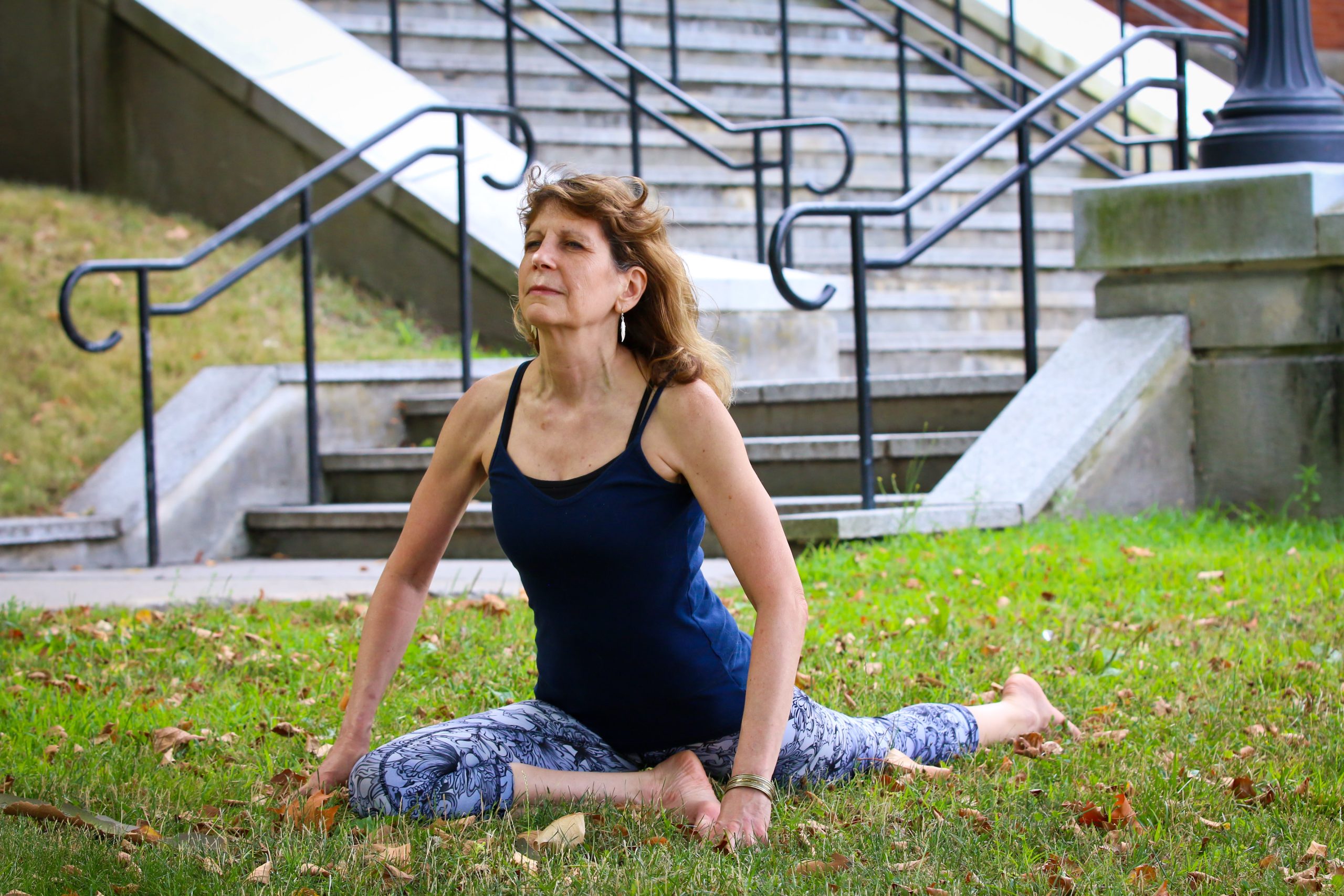
Hip Openers generally require an external rotation of the hip joint. External rotation of the hips is when the inner thigh moves away from the body’s center. External rotation may put pressure on the SI joint. Hip openers include poses like butterfly (bound angle pose), pigeon, and cow face pose. To avoid aggravating SI joint dysfunction, focus on hip-opening poses that involve internal rotation, like a low lunge, or decrease the amount of external rotation by using props like blocks or blankets in seated hip openers.
Backbends can be challenging for individuals with SI joint dysfunction because they stress the lower back and SI joint. To modify these poses, use props like blocks or blankets to support the spine if you are on your back. Focus on placing more of the back bend into the thoracic spine (between the shoulder blades), not just in the low back.
Warrior I positions the front leg forward with a bent knee. The back leg reaches straight back on the mat. This pose causes an asymmetry of the pelvis. The front half of the pelvis rolls open, and the back half rolls inward. Warrior I can also cause compression in the SI joint due to the forward tilt of the pelvis. In addition, squaring the hips in Warrior One pose creates more asymmetrical rotation of the SI joint, causing strain and instability if the joint is already compromised.
Learn how to modify Warrior 1:
Triangle yoga pose, places the legs straight and far apart, with the torso rotated to the long side of the mat. This pose stretches the muscles and ligaments surrounding the SI joint. Bending the front knee reduces the stretch, helping to alleviate pain and discomfort. Additionally, bending the front knee allows engagement of the muscles in the legs and core, providing stability to the SI joint.
Learn more about modifying Triangle pose:
Yoga Pose Makeover – Triangle Pose
How to Stabilize the SI joint during yoga practices
In addition to modifying poses, stabilizing the sacroiliac joint by engaging the legs and core is important to avoid exacerbating dysfunction or causing further injury by preventing excessive movement in the joint.
Here are some tips for stabilizing the SI joint during your practice:
Engage the Core
The core muscles stabilize the SI joint. These include the abdominals, pelvic floor, and back muscles. Focus on engaging these muscles creates a strong, stable base for your practice.
Know the proper alignment for the pose
Proper alignment creates stability in the SI joint during yoga poses. Alignment tips include:
- Aligning the hips with the pelvis.
- Engaging the core.
- Avoiding excessive movement or rotation in the lower back.
Focus on maintaining a neutral spine and pelvis throughout your practice.
Use Props
Props like blocks, straps, and blankets reduce stress on the SI joint. For example, you can use a block or blanket under the hips in seated poses to relieve pressure on the SI joint.
Learn more about using props:
Avoid overstretching
Pushing beyond your limits in yoga poses can be tempting, but overstretching can stress the SI joint and lead to injury or dysfunction. Instead, focus on stretching gradually and mindfully, and avoid pushing beyond your comfort zone.
Remember to listen to your body and make the poses yours. Work with a qualified yoga instructor if you have concerns about your practice.
Stay tuned. I will post more yoga pose makeovers!
I recorded a brief, about a three-minute video about the SI joint.
Enjoy!

Your blog is a breath of fresh air in the often mundane world of online content. Your unique perspective and engaging writing style never fail to leave a lasting impression. Thank you for sharing your insights with us.