
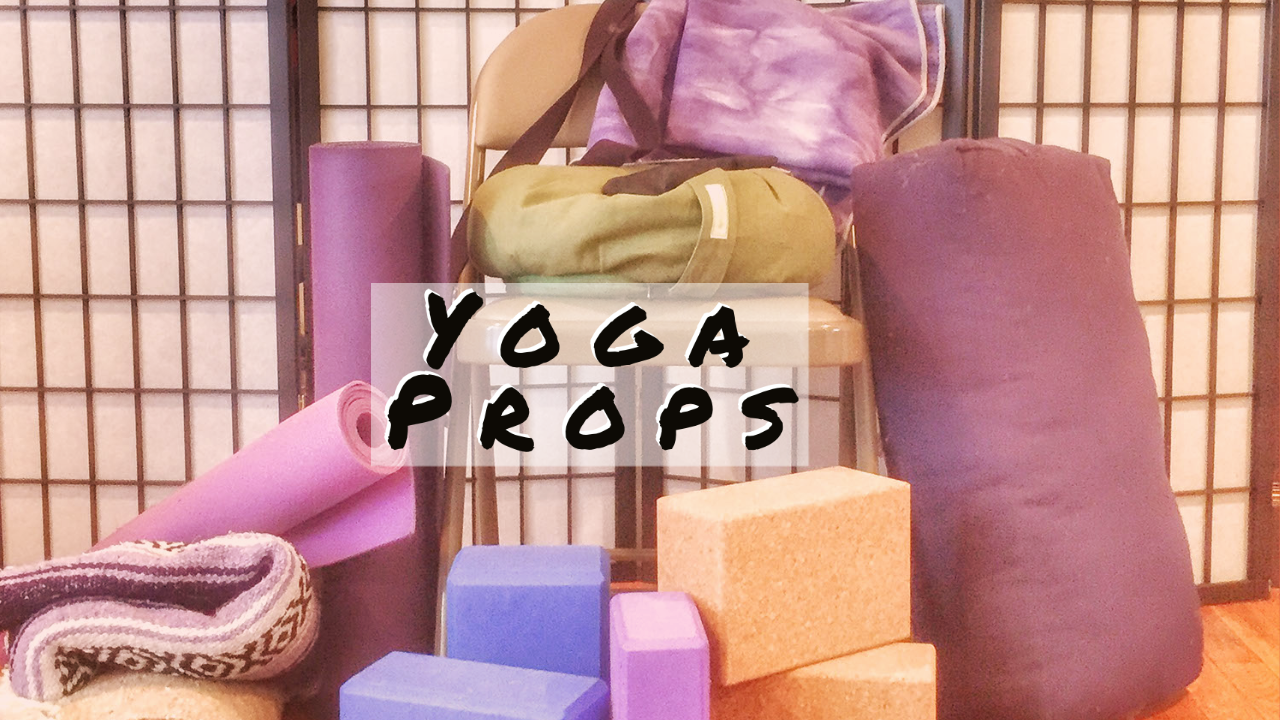

Yoga props can be essential to making a practice your own, but props are often thought of as training wheels only for beginners. Even advanced practices can benefit from additional support, and many advanced poses require props to achieve them. Not all bodies are the same, and using props is a way to create a unique practice built around your body shape and practice needs.
Yoga can be useful for developing self-awareness and getting out of our ego’s unrelenting list of “shoulds.” Using props is recognizing that we are unique in the way we practice. Contorting into shapes that place stress on the joints, or stop the flow of breath and energy, is the realm of ego. Ego wants to believe that if we try hard enough, we can master anything without aid. But ego often leads us to places we don’t need to go. Yoga practices may bring us to the edge of our comfort zone, but they should not take us into harm or create more stress.
Restorative-type practices rely heavily on props, but even vigorous practices can benefit from some assistance.
What do I mean by yoga props?
Yoga props can be anything you use during your practice to help you achieve your practice goals. I am listing several common Yoga props, but there are many more.
Yoga Mats
The first prop that most people use is a yoga mat. For active, standing practices, a valuable asset is a mat that doesn’t slide around on the floor or is so slick that your hands slide out from under you in a downward-facing dog.
Selecting the right yoga mat depends on the type of yoga you practice, where you practice, and your preferences. A thick mat can make standing or balancing poses feel more wobbly, but one that is too thin may be hard on the knees in kneeling poses.
You may want something easily carried and washable if you practice outdoors or travel. There are also yoga towels with grippy rubber fingers on the back that can be used to cover a rubber mat for hot yoga or traveling. I have a thin rubber sticky mat that I use at the beach or outside, a medium-weight mat for inside on a hardwood floor, and a yoga towel that I take with me when I travel.

Yoga Blocks
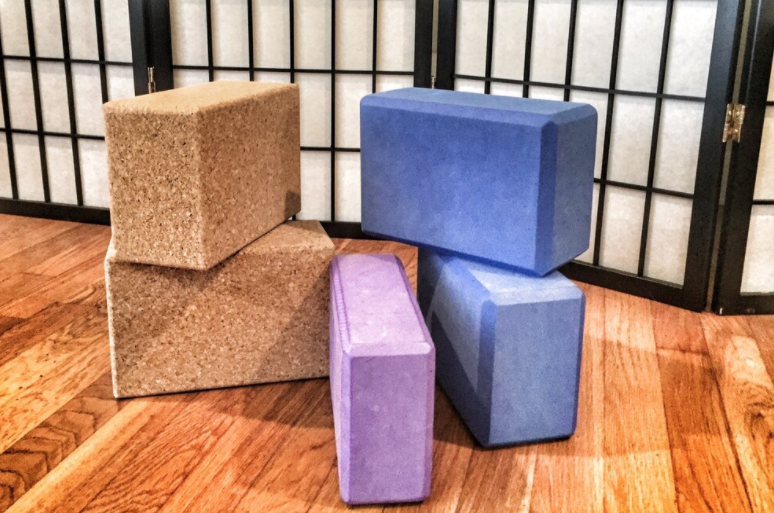
Yoga blocks are the next commonly used prop. Yoga blocks help bring the floor up to us. Blocks can be used in poses like triangle pose to keep the spine open rather than contorting to get the hand toward the mat. Blocks are useful as seats, especially if sitting right on the floor or mat causes the spine to round forward. Blocks can limit the rotation of twists on your back.
The standard block size is four inches deep. Some are larger or smaller in depth. Blocks generally come in foam or cork. The foam blocks are softer but less stable. They are best for sitting on or placing under the sacrum in a supported bridge or shoulderstand. Cork blocks are more substantial and more stable. They are best for supporting weight, such as using them to balance a hand in the pose balancing half moon.
Yoga Blankets
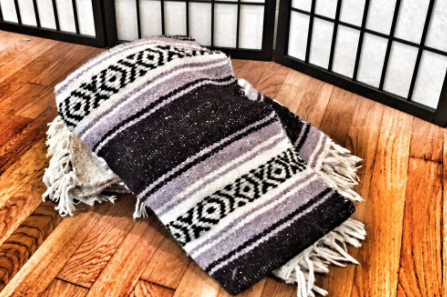
Restorative and Yin forms of yoga often use more than one blanket to support the pose in a way that allows muscular relaxation. Other practices can also benefit from using a blanket or a beach towel.
A blanket or towel can be used to protect the knees on hard surfaces during kneeling poses. A blanket can be placed under the spine during savasana. A rolled blanket can support the neck in relaxation. Folded blankets can be used as props like blocks to sit on, support prone twists, or a shoulderstand. Blankets can cover you up during savasana as the body cools down. Some blankets are thin washable cotton, and some are heavier wool blankets. The cotton blankets may need to be doubled or tripled for more height during restorative practices. The wool blankets are thicker and best suited for restorative practices but require dry cleaning. Some heavier versions of the Mexican cotton blankets can be washed.
Yoga Straps
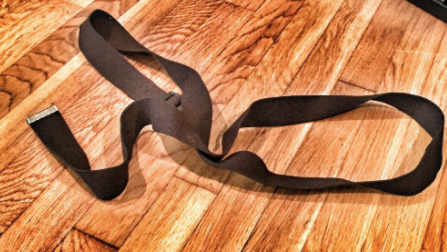
Yoga straps are generally eight-foot long cotton fabric with a D ring at one end to create a loop. The yoga strap can be used as an extension of the arms in binds when the arms can’t reach each other to wrap like in a cow face pose. Straps can help you stay in restorative poses with little effort; an example is keeping the legs from falling away from each other in the legs against the wall pose.
Yoga straps should not be used as leverage. It is tempting to use a strap in poses like seated forward folds, wrap the strap around the feet, grab with the hands, and crank. This takes the muscular action out of the pose and may take the practitioner past a healthy joint range. It is also most likely your ego doing the cranking.
Bolsters
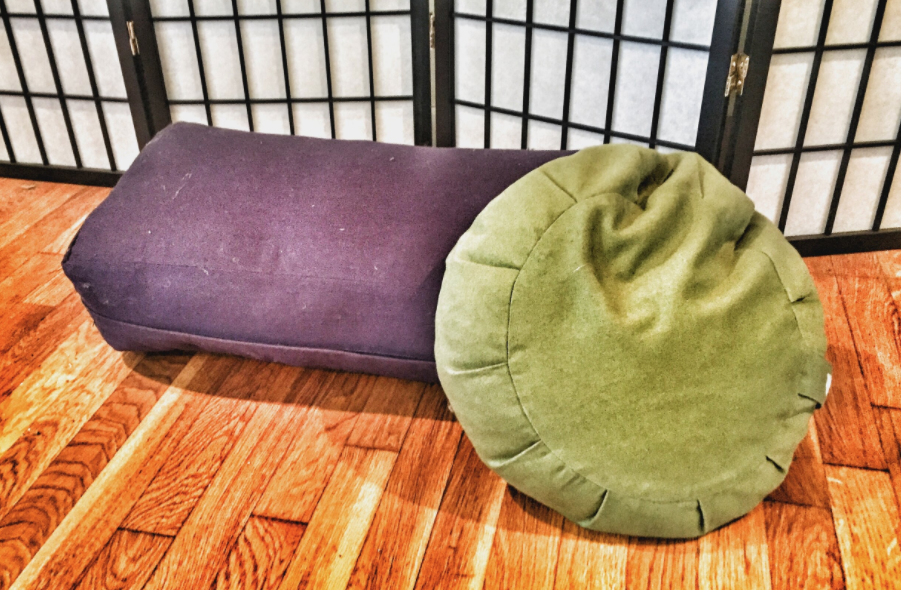
There are many types of bolsters or cushions. Some are square. Some are long and round. They can be used to sit on, to support the knees in savasana, or to support restorative poses. There are also smaller neck pillows that can be used to support the neck during relaxation. A rolled towel can be used as a neck pillow. One or more folded or rolled blankets can be used in place of a bolster.
Other Yoga Props and Accessories
The yoga wedge is similar to a block but longer with a slanted surface. Wedges can support the heels if the Achilles is tight during forward folds, or they can be used under the hands to support the wrists in poses like a downward-facing dog. Rolling up the bottom or top edge of the mat can be used in place of a wedge.
Eye pillows are placed over the eyes during relaxation to block light. They can also be cooled or enhanced with essential oil sprays like lavender, perfect for deep relaxation or headaches.
Yoga props can be anything you have in your house. A chair back or seat can be used for support in balancing or standing poses. Just ensure it is on a no-slip surface like your mat so it doesn’t slip out from under you. You may use a beach towel instead of a yoga blanket or a long towel instead of a yoga strap. A large, sturdy book can be used as a block.
Try experimenting with using props in your practice. Let go of the belief that props are like training wheels, only for beginners. They can be a valuable part of finding your unique practice.
Check out my post, Yoga props for the perfect practice to watch me demonstrate using some of these props!
Yoga props for your perfect practice

0 Comments