Yoga and the Sacroiliac Joint

Yoga and the Sacroiliac Joint

In this musing, I discuss the sacroiliac (SI) joint. First, I will talk about what it is. Then, I’ll discuss how yoga poses can affect it and suggest ways to stabilize this joint during Yoga to avoid pain, discomfort, and injury.

What is the Sacroiliac (SI) joint?

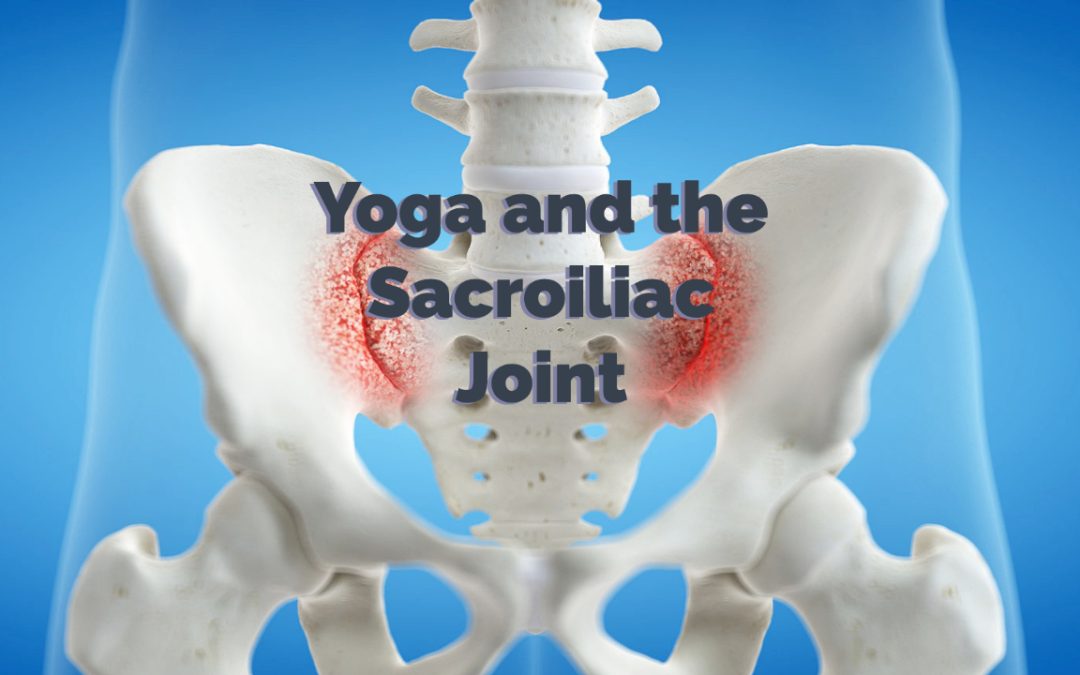
The sacroiliac joint, or SI joint, is where the sacrum (your tailbone) joins the two halves of the ilium (the large bones of your pelvis). This joint transfers the weight of your upper body to your legs and vice versa. It also creates stability during movement.

The SI joint should be relatively immobile

Only a little movement is needed to absorb shock and distribute weight evenly through the body. The ligaments around the SI joint and the muscles of the lower back and hips that stabilize the pelvis also stabilize the SI joint.

The SI joint can become dysfunctional

SI joint dysfunction can occur when the joint becomes too mobile due to the weakening of the ligaments and muscles supporting it due to injury or aging.

What happens if the  SI joint becomes dysfunctional?

Sometimes, the SI joint locks in one position. In addition, there might be decreased range of movement and stiffness in the lower back, hips, or thighs. Activities like bending, lifting, or twisting may become challenging because of reduced mobility. Instability in this joint can make it difficult to maintain balance and increase the risk of falls.

What are the risks for SI joint dysfunction?

SI joint dysfunction may occur with degenerative spinal issues or previous back or hip injuries. In addition, during pregnancy, hormonal changes can cause the ligaments in the pelvis to loosen and stretch.

Hypermobility and the SI joint

Hypermobility, or the ability of joints to move beyond their normal range of motion, can create instability in the SI joint.

The SI joint typically has limited mobility due to the strong ligaments and muscles that stabilize it. However, in people with Hypermobility, the ligaments and muscles may be weaker and more easily stretched. This stretch allows the SI joint to move excessively, creating instability.

In addition, Hypermobility can affect other joints, further aggravating SI joint dysfunction. For example, Hypermobility in the hips or lumbar spine may cause the SI joint to bear more weight, leading to increased stress and dysfunction.

Yoga and SI Joint dysfunction – Problematic Poses

While Yoga is generally beneficial for building strength and flexibility, certain poses can stress the SI joint.

Next, I’ll explore common Yoga poses that can affect the SI joint and discuss how to modify them to protect the SI joint.

Both seated and standing folds may aggravate SI joint issues. Forward folds may stretch the hamstrings and lower back. When the legs are straight, the hamstrings pull the SI joint in one direction, and the weight of the spine moving forward pulls the SI joint in the opposite direction creating a shearing force. To modify forward folds, bend the knees slightly or place a block under the hands in standing folds to reduce the shearing. If seated, bend the knees, and sit higher on a block or folded blanket.


Learn more about ways to modify forward folds:

Yoga Realigned – Forward Folds

Yoga Pose Makeover – Forward Fold


Twists can also be problematic for individuals with SI joint dysfunction, particularly when twisting from the lower back. To avoid excessive strain on the joint, focus on turning from the upper back and shoulders instead. ​


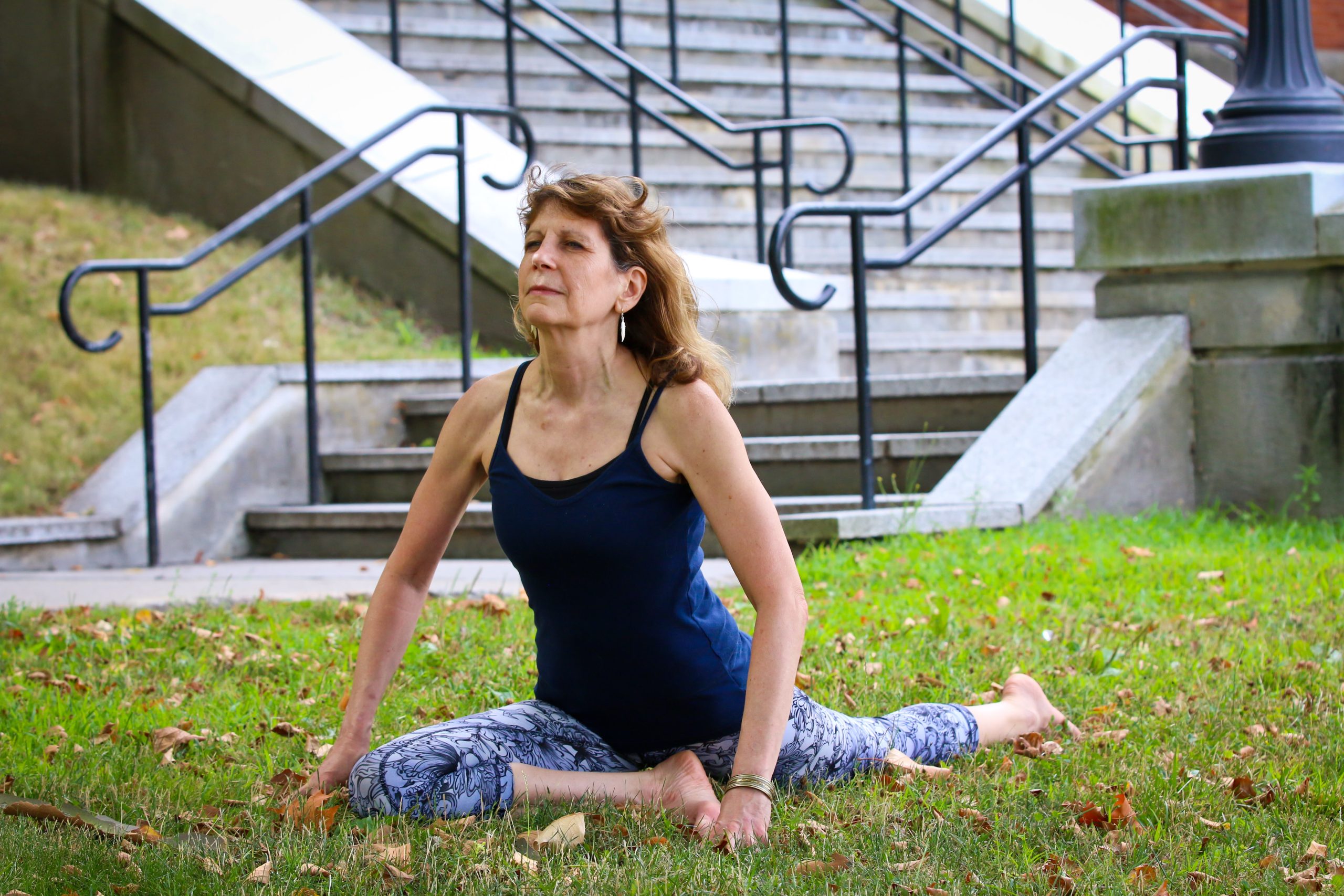
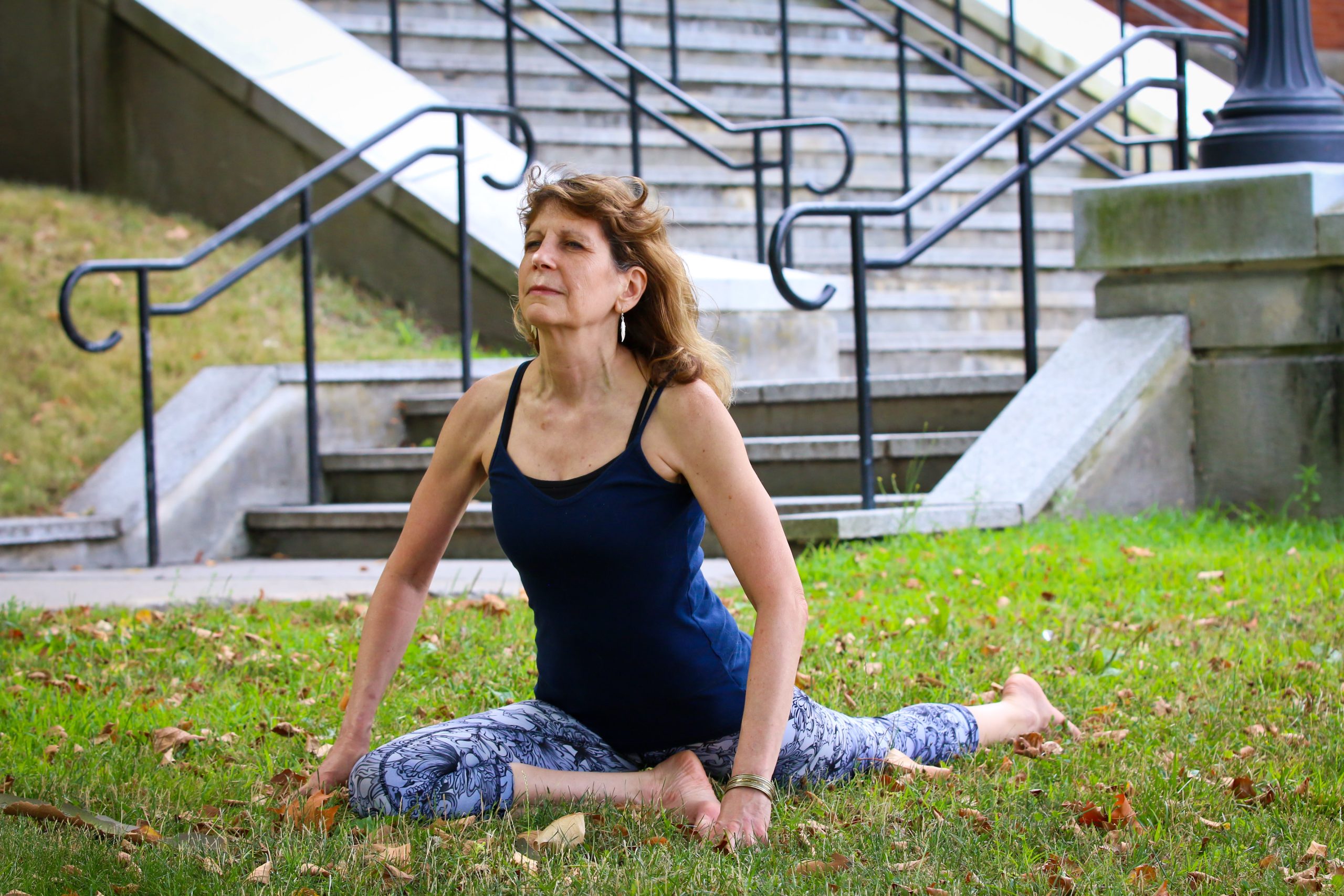
Hip Openers generally require an external rotation of the hip joint. External rotation of the hips is when the inner thigh moves away from the body’s center. External rotation may put pressure on the SI joint. Hip openers include poses like butterfly (bound angle pose), pigeon, and cow face pose. To avoid aggravating SI joint dysfunction, focus on hip-opening poses that involve internal rotation, like a low lunge, or decrease the amount of external rotation by using props like blocks or blankets in seated hip openers.
 

Backbends can be challenging for individuals with SI joint dysfunction because they stress the lower back and SI joint. To modify these poses, use props like blocks or blankets to support the spine if you are on your back. Focus on placing more of the back bend into the thoracic spine (between the shoulder blades), not just in the low back.


Warrior I positions the front leg forward with a bent knee. The back leg reaches straight back on the mat. This pose causes an asymmetry of the pelvis. The front half of the pelvis rolls open, and the back half rolls inward. Warrior I can also cause compression in the SI joint due to the forward tilt of the pelvis. In addition, squaring the hips in Warrior One pose creates more asymmetrical rotation of the SI joint, causing strain and instability if the joint is already compromised.

Learn how to modify Warrior 1:

Yoga Pose Makeover – Warrior 1

Yoga Practices – Warrior 1 Realigned

Triangle yoga pose, places the legs straight and far apart, with the torso rotated to the long side of the mat. This pose stretches the muscles and ligaments surrounding the SI joint. Bending the front knee reduces the stretch, helping to alleviate pain and discomfort. Additionally, bending the front knee allows engagement of the muscles in the legs and core, providing stability to the SI joint.

Learn more about modifying Triangle pose:

Yoga Pose Makeover – Triangle Pose


How to Stabilize the SI joint during yoga practices

In addition to modifying poses, stabilizing the sacroiliac joint by engaging the legs and core is important to avoid exacerbating dysfunction or causing further injury by preventing excessive movement in the joint.

Here are some tips for stabilizing the SI joint during your practice:

Engage the Core

The core muscles stabilize the SI joint. These include the abdominals, pelvic floor, and back muscles. Focus on engaging these muscles creates a strong, stable base for your practice.

Know the proper alignment for the pose

Proper alignment creates stability in the SI joint during yoga poses. Alignment tips include:

  • Aligning the hips with the pelvis.
  • Engaging the core.
  • Avoiding excessive movement or rotation in the lower back.

Focus on maintaining a neutral spine and pelvis throughout your practice.

Use Props

Props like blocks, straps, and blankets reduce stress on the SI joint. For example, you can use a block or blanket under the hips in seated poses to relieve pressure on the SI joint.

Learn more about using props:

Yoga Props for your perfect practice

Yoga Props – Not Just for the Beginner

Avoid overstretching

Pushing beyond your limits in yoga poses can be tempting, but overstretching can stress the SI joint and lead to injury or dysfunction. Instead, focus on stretching gradually and mindfully, and avoid pushing beyond your comfort zone.


Remember to listen to your body and make the poses yours. Work with a qualified yoga instructor if you have concerns about your practice.

Stay tuned. I will post more yoga pose makeovers!

I recorded a brief, about a three-minute video about the SI joint.  

Enjoy!

Short Yoga Practice – Surrender

Short Yoga Practice – Surrender


Surrender to the Moment

The present moment can not be thought about, only felt.”  Breathing through the Whole Body – Will Johnson

In this video, I lead a short yoga practice, asking you to surrender completely to the moment.

This practice will include standing poses and some movements on hands and knees.  With all yoga practices, it is your responsibility to practice in a way that is safe for you.  If you are not able to get up and down from the floor, this is not the practice for you.  Leave any movement out that feels unstable, or creates pain discomfort, or sensation in a joint.  The breath should be able to flow effortlessly.

There are many ways to practice a pose, the advanced yoga practitioner realizes it is not about reaching a goal, it is about practicing with awareness.  

This practice video is 30 minutes long.  You will need a yoga mat.  Have a couple of yoga blocks, a blanket, or a towel, and you might want a pillow or cushion handy.

This practice is about creating awareness.  It is practicing in a way that feels grounded, and spacious and allows the breath to flow.  It is letting go of the “shoulds”, there is no goal in this practice, only the journey.  Try not to think about the practice, experience it.  Feel the breath and the sensations in the body as you practice. 


(more…)

Yoga is not the pose

Yoga is not the pose

I see many social media posts with titles like “Master Your Headstand.” Posts and articles like this make it seem like advancing your Yoga practice is about achieving athletic, challenging poses.

Yoga is not about attaining fancy postures like headstands but about the awareness brought to the practice. What do I mean by awareness? Awareness is not thinking about your practice but being present to the sensations created by your practice.

Yoga is a tool to learn to make skillful choices by letting go of the “should” that your ego generates and becoming aware of what you need at that moment.


Recognize the wisdom of your body

Awareness is not overriding the wisdom of your body for ego gratification. You may shut out and override the subtle signals the body attempts to communicate. You may be so in your head that you have lost the ability to connect with the body’s felt sense and wisdom.

Yoga is learning to recognize when you are pushing yourself into an unhealthy place, creating more harm than good.

Yoga often reinforces the tendencies you already have. If you are a type A addictive overachiever personality, Yoga can feed that tendency. Your natural inclination may be to push hard to achieve a pose. Nothing is wrong with achievement, but constantly moving beyond your limits may create exhaustion or illness, or injury over time.

For the overachievers, learning to let go, and let be, might be what is needed. Yoga is realizing you don’t need to force everything, or everything has to be about achievement. The journey and the learning are more important. You don’t need to force yourself to enjoy a gentle class. It means focusing on learning to let go and be with what is, even in a heated vinyasa class. Gracefully letting go of the result is a core principle of Yoga and the hardest for many. For me, it was.  

Find your just-right place in a range of possibilities

As I’ve talked about in my last few musings, Yoga is a balancing of opposites. If you are too cold, you need warmth. If you are too warm, you need to cool off. There is the concept of Sthira or Sukkha, effort and stability, versus ease and flexibility. How much effort do you need to apply, and how much is too much? Too much effort creates physical tension, and too much flexibility may mean stretching joints and ligaments. Either way, there is a greater chance of injury.  

There is also the Concept of the Gunas, or the three states of mind. Tamas is dull and heavy. Rajas is agitated or excited. The goal is to create Sattva, neither sluggish and heavy nor agitated and restless. Too much dullness needs some excitement to tip the needle toward Sattva. Too much Rajas needs a little grounding Tamas to tip the needle back toward Sattva.  


The balance for each individual will be different. The only way to notice what the “just right” point is, is to be aware and observant. What is working in your practice, and what is not? It takes honesty to be what you are, practice for you, and not for someone else.

Stay present in the NOW

Being aware requires being present. Your mind is in the moment, not off in the past or thinking about the future. It helps to anchor your attention to one object. Your anchor might be an awareness of the breath or physical sensations. It might even be a sound. It’s not thinking about your practice, two steps ahead, focused on where you are going; it’s focusing on being in the now.

Whatever happened in the past is only a memory tainted by perception, and the future is not known. If you are insistent on a future that looks a certain way, you miss the opportunities and the possibilities present in the now. You may think a pose needs to express in a certain way, but if you are present through the creation, your outcome may be different and honestly more truthful. What you created yesterday, or last year in your practice, may not be your practice today.

Yoga teaches you to be present during the transitions, those in-between places when you are between poses or between life goals. Yoga is not about reaching a specific destination. Yoga is learning that everything is a journey. One end is another beginning. If you are honest, you might realize that the goal you thought was your destination may not be, and you may change course instead of forcing the end result.

Act without expectation

Yoga is acting without expectation of the outcome. It is applying the action you believe is truthful based on your awareness and then letting go of any expectations about the results. You did the best you could. Nothing more can be done. You then place your attention on the next moment with full awareness and honesty, creating the following truthful action. As a control freak, this is very hard for me to master.

This does not mean giving up on goals. It is being realistic about what is needed to achieve them. It is learning to recognize where you need to take a few steps back or where your expectations may not be based on your current truth. It understands what it is that you really need, not what your ego thinks you need.

You are the witness

Yoga attempts to teach you how to settle your mind. Your mind is not your thoughts. It is the space behind your thoughts. You learn to be the witness, no longer enslaved to your thoughts. It is moving awareness from the head to the heart, not thinking about your practice, feeling it, embodying it. Yoga is learning not to apply good or bad judgments or label the experience. Words are representations of the truth. They are the map, not the territory. Instead of placing awareness on the words or judging your practice, Yoga focuses on what is being felt in the moment.


Everything changes

Yoga is realizing that everything changes. Nothing stays the same. You can’t expect to have the same practice each day, and over time your practice will change. The only way to grow and adapt is to be aware of what is changing, adjusting your just right place.  

Your practice is unique

Most yoga poses are not meant for everybody, yet we have expectations of achieving them, even if it means potentially hurting ourselves. Many poses can only be achieved by the hypermobile Yogi. Even then, this may create joint compression and damage over time.  

Postural Yoga was meant to be a step toward practicing meditation, learning to separate the thoughts, emotions, senses, and distractions from the witness underneath. This process begins by embodying your practice, not denying the truth of what is being felt.


What is a Yoga practice?

Yoga is being fully present in each moment, aware of the truth. It is applying the balance of opposites and finding your just right place on a spectrum of possibilities.

Yoga is action without expectation of the results of your actions. Yoga understands that everything changes, no two practices will be the same, and your practice will evolve over time.

Yoga takes you beyond your mind, working toward the felt sense and wisdom within your body. It is finding the witness beneath thought and emotion.


Yoga is not about getting into a handstand but understanding why you want to create this pose and whether it works for you now or ever. 


Yoga is taking these concepts off the mat. How present and aware can you be in each moment, not just while on your Yoga mat? Yoga does not require any specific pose or even a postural practice, although movement is a form of anchoring your mind.

Yoga Pose Makeover –  Forward Folds

Yoga Pose Makeover – Forward Folds

In this Video, I realign Forward Folds for the normal human body.

Forward folds may not work for every spine. In this video, I offer ways to create a forward fold that supports the low back and entire spine.

Read more about how to realign your forward fold in my post; Yoga pose makeover – Forward Fold.

Standing in the eye of the storm

Standing in the eye of the storm

You can dance in a hurricane, but only if you’re standing in the eye.”

Brandi Carlile “The Eye”


As the world around us becomes unsettled and lives are disrupted, there is one place where there is always stillness, that quiet place within you. Whether you get there through meditation or movement practice, it is there for you.

Patanjali’s Yoga Sutra guides you to be the witness, abiding in your true nature. What is your true nature? Ananda, the state of love, of peace.
Anything that is not Ananda is a temporary state.

Imagine your mind is a beautiful, bright blue sky. This clearness is the actual state of your mind. When clouds roll in, they cover the blue sky behind them. But the blue sky is still there. If you could fly through the clouds, you would see the sky again. The clouds are temporary. In time, even the worst storms pass. In the middle of hurricanes, the sky and sun are visible from within the eyewall. Getting to the eyewall requires facing the turbulence around it. But within the eyewall, you can watch the storm without being buffeted by the storm’s winds.

Take a few moments, on the mat or not, and imagine yourself the calm in the center of the chaos. The fears, the uncertainties, are the storms that swirl around you. Allow yourself to be the witness, to watch to notice from your place within the eye of the storm.

I invite you to practice the Blue sky mind meditation.

Mind Like Blue Sky Meditation

I wish you all health and peace.